
For advanced CMC producers, the right powder is not just a material choice. It is a critical design variable that can influence processing efficiency, composite consistency, and part performance. Washington Mills CARBOREX® micron and submicron powders are precision engineered for CMC systems requiring controlled thermal, mechanical, electrical, and processing performance.
Ceramic Matrix Composites
Ceramic Matrix Composites
Break through barriers with high-performance silicon carbide powders for CMC reinforcement
Silicon carbide powders are used in ceramic matrix composites to support thermal stability, wear resistance, chemical resistance, dimensional control, electrical-property tuning, and matrix packing behavior. Particle size, distribution, morphology, purity, and surface characteristics influence how the powder disperses, packs, and performs in the final composite.
Why Engineered Ceramic Powders Matter for Advanced CMC Systems
Silicon carbide powders can play a critical role in the reinforcement of ceramic matrix composite parts and materials, helping manufacturers control the thermal, mechanical, and electrical behaviors of advanced CMC systems.
Unlike fiber or whisker reinforcement approaches that may introduce directional dependence during processing, SiC powders distributed throughout the matrix can support more uniform performance under complex, multidirectional stresses. This makes powder-based and powder-reinforced material choices particularly impactful for CMC parts and systems exposed to elevated temperatures, wear, chemical exposure, electrical demands, repeated mechanical loading or lightweight structural requirements.
In advanced ceramic composites, silicon carbide powders contribute to:
- matrix reinforcement and material consistency
- thermal stability under demanding operating conditions
- wear, abrasion, and chemical resistance
- reduced dimensional mismatch through low thermal expansion
- electrical and dielectric property control
- packing behavior between fibers and other matrix inputs
- damage-tolerance support through crack deflection and stress distribution
Key Properties of Ceramic Powders for Ceramic Matrix CompositesFor CMC producers, the most important SiC powder variables include:
|
Performance Benefits of CARBOREX® Powders in Ceramic Matrix Composites
CARBOREX® silicon carbide powders are exceptionally responsive ceramic materials manufactured under tightly controlled processes to support consistency, repeatability, and reliable powder performance.
Precision engineered to balance a suite of demanding requirements—including heat resistance, durability, electrical property control, and process consistency—CARBOREX® micron and submicron SiC powders are tested and trusted to perform in advanced CMC systems where material reliability and repeatable performance are essential.
Thermal Performance
| Electrical and Dielectric Control
| |
Mechanical Durability
| Processing and Customization
|
Particle Control for CMC Processing and Performance
In ceramic matrix composite systems, powder performance depends on more than material chemistry alone. Particle size, particle size distribution, morphology, purity, and surface characteristics can influence how the powder flows, packs, disperses, and interacts with the surrounding matrix.
Washington Mills works with CMC producers to evaluate silicon carbide powder characteristics against specific processing methods, matrix systems, and performance requirements. By controlling key particle variables, CARBOREX® powders support more consistent matrix integration, improved packing behavior, and repeatable composite production.
| Control Lever | Performance Impact |
|---|---|
| Particle Size | Influences flowability, dimensional control, matrix distribution, and processing behavior |
| Particle Size Distribution | Supports packing density, part density, loading potential, and consistency throughout the matrix |
| Particle Shape | Affects flowability, fiber interaction, equipment wear, and matrix integration |
| Surface Properties | Influences interface quality, matrix reactivity, compatibility, dispersion, and bonding behavior |
Determining SiC Powder Specification Needs for CMC Development
Key factors include target operating temperature, matrix chemistry, fiber system, desired loading level, particle size distribution, dispersion behavior, purity requirements, and electrical or dielectric targets.
Washington Mills high-purity ceramic powders are compatible with a range of environments and temperatures, and can be integrated within a variety of matrices, including:
|
|
|

Advanced SiC Powders
for Ceramic Matrix Composite Applications
Take a deeper technical look at powder selection factors and explore how CARBOREX® SiC powders can support thermal, mechanical, electrical, and processing requirements in CMC materials.
SiC Powder Reinforcements
for Ultra-High and Moderate-Temperature Systems
Ceramic matrix composite systems are used across a range of operating environments, from ultra-high-temperature applications requiring thermal stability and mechanical durability to moderate-temperature systems requiring wear resistance, electrical control, or lightweight performance.
CARBOREX® silicon carbide powders can be specified to support different CMC design goals based on the matrix system, processing method, application requirements, and performance goals.
-
In ultra-high-temperature applications
High-force and ultra-high-temperature CMC systems require reinforcement materials that can support strength, stability, and durability under severe thermal and mechanical stress. CARBOREX® silicon carbide powders can contribute to CMC designs exposed to elevated temperatures, thermal cycling, oxidation, abrasion, erosion, and high-speed operating environments.
For high-temperature CMC applications, engineered SiC powders help support:
- Superior mechanical durability
- Thermal stability for elevated-temperature environments
- Resistance to thermal shock, thermal cycling, and localized thermal stress
- Chemical stability for superior oxidation resistance
- High hardness, with marked resistance to abrasion and erosion
- Advanced damage tolerance through effective crack propagation resistance and stress distribution
-
In moderate-temperature applications
Moderate-temperature CMC systems often require a balance of lightweight strength, wear resistance, chemical stability, and processing consistency. CARBOREX® silicon carbide powders can support ceramic composite designs where durability, dimensional control, heat dissipation, and material reliability are important to application performance.
For moderate-temperature CMC applications (operating below 500°C), engineered SiC powders help support:
- Lightweight reinforcement with a strong strength-to-weight profile
- Wear, abrasion, impact, creep, and fatigue resistance
- Thermal conductivity for efficient heat transfer and dissipation
- Chemical stability in demanding service environments
- Production of critically lightweight parts and system components
-
In electrical and dielectric-control applications
CMC systems used in electrical and dielectric-control applications may need to balance insulation, controlled conductivity, heat management, and stability under operating stress. CARBOREX® silicon carbide powders can support ceramic composite designs where dielectric strength, EMI/ESD resistance, high-voltage performance, and thermal-mechanical reliability are important material considerations.
For electrical and dielectric-control CMC applications, engineered SiC powders help support:
- insulating, semiconductive, or dissipative property control
- resistance to electromagnetic interference and electrostatic discharge
- high-voltage insulation and precise electrical performance control
- thermal conductivity and dimensional control in heat-generating systems
- consistent electrical response through controlled powder characteristics
- energy loss minimization through tunable dielectric strength
CMC Applications Supported by Ceramic Powders

Aerospace & Space Exploration
CMC systems used in aerospace and space environments place extreme demands on material lightweighting, thermal stability, wear resistance, and durability under severe mechanical and thermal loads. CARBOREX® silicon carbide powders can support CMC development where controlled particle characteristics, thermal performance, and mechanical durability are critical to component design.

Electronics, EMI, ESD and Dielectric-Control
For CMC systems requiring electrical-property control, silicon carbide powders can help balance insulating, semiconductive, or dissipative behavior. CARBOREX® powders support applications where dielectric strength, EMI shielding, ESD resistance, and high-voltage performance are important design considerations.

Energy & High-Temperature Systems
Energy and high-temperature systems demand materials that can withstand thermal cycling, oxidation, chemical exposure, and prolonged heat. Silicon carbide-reinforced CMCs can help support thermal stability, heat transfer, dimensional control, and durability in demanding operating environments.
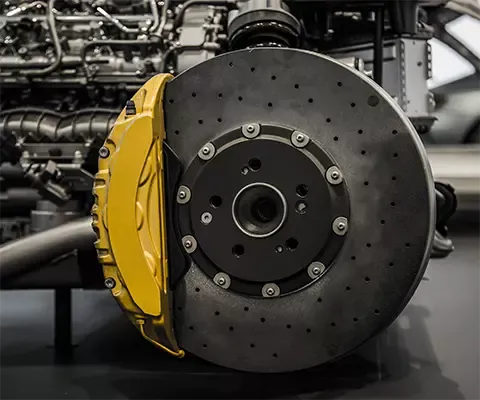
Friction & Braking
Friction and braking applications place repeated thermal, mechanical, and wear demands on composite materials. CARBOREX® silicon carbide powders support CMC systems where hardness, heat dissipation, low thermal expansion, and resistance to wear are critical performance factors.
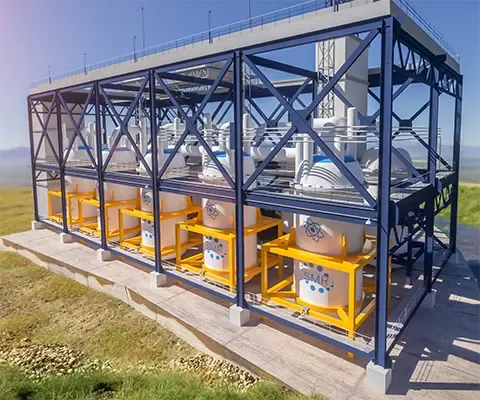
Nuclear Shielding
Nuclear and radiation-adjacent applications may require engineered ceramic powders selected for chemical stability, thermal resistance, wear performance, and, in some cases, neutron-absorbing properties. Washington Mills supports CMC development with silicon carbide, boron carbide, and other engineered fused minerals.
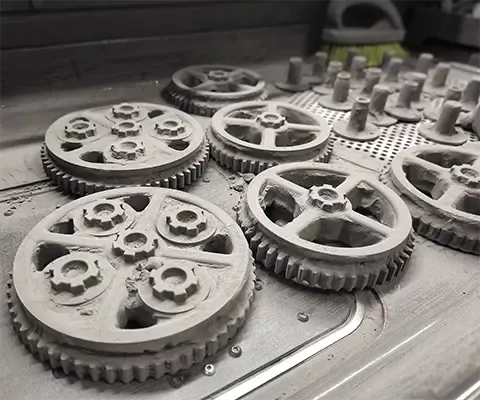
Additive Manufacturing
Additive manufacturing of ceramic matrix composite components relies on powders that support flow, dispersion, packing, and repeatable processing. CARBOREX® silicon carbide powders can support 3D-printed or near-net-shape CMC parts where controlled particle characteristics influence processing and performance.

High-Wear Systems
High-wear CMC applications require materials that can resist abrasion, erosion, impact, and long-duration mechanical stress. Engineered silicon carbide powders can help reinforce ceramic composite systems exposed to demanding surface contact, particle impact, or severe service conditions.
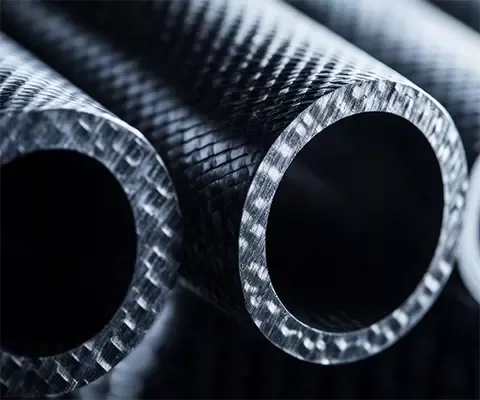
Advanced Industrial CMC Systems
Advanced industrial CMC systems often require customized material behavior rather than off-the-shelf reinforcement. Washington Mills works with producers to evaluate particle size, distribution, morphology, purity, and surface characteristics for application-specific ceramic composite requirements.
Need a controlled SiC powder for a CMC system?
Washington Mills works with CMC producers to evaluate particle size, particle size distribution, purity, morphology, surface chemistry, and lot-to-lot consistency requirements for advanced ceramic composite applications.