Next-Gen Performance Solutions in 3D Printing
Breathe life into your most advanced designs with the strength and stability of silicon carbide.

Additive manufacturing, a technology that’s been around for nearly 30 years, has become increasingly more widespread offering possibilities for future product development. It is the process of creating a structure made by the addition of thousands of tiny layers, when combined, create a product. Computer and CAD software assists when designing and “printing” the desired shape.
Breathe life into your most advanced designs with the strength and stability of silicon carbide.
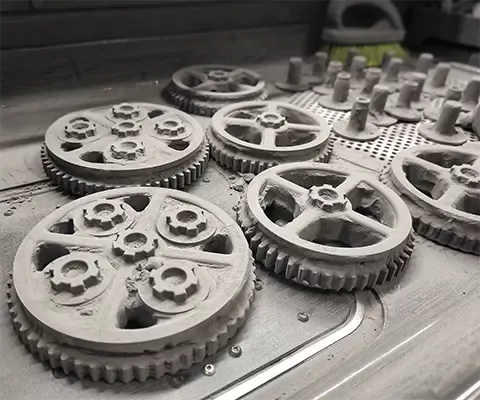
3D ceramic printing allows manufacturers to produce complex geometries and detailed features that can be difficult to achieve through conventional casting, machining or subtractive manufacturing. Depending on the printing method, ceramic powders may be processed in slurries, photocurable resins, extrudable pastes, or powder beds through processes including stereolithography, extrusion-based printing, binder jetting, direct ink writing, robocasting, and polymer-assisted powder bed fusion.
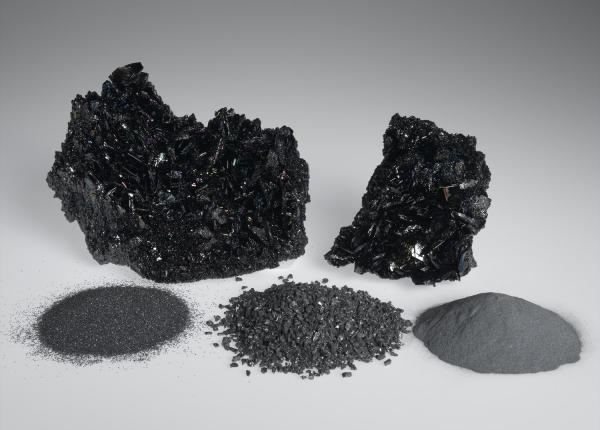
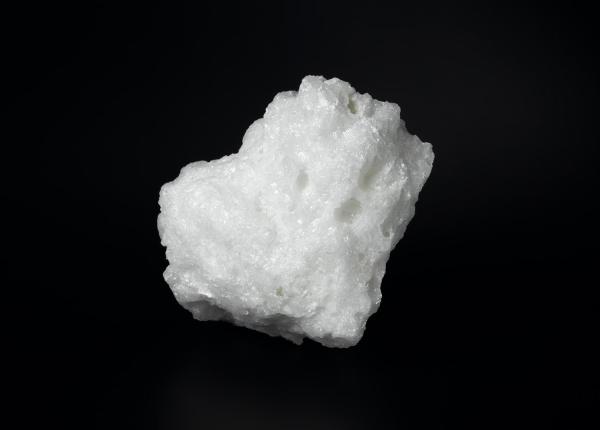
Printed ceramic components often require additional processing, such as sintering, infiltration, or pyrolysis, to develop the properties required for their intended applications. Washington Mills offers silicon carbide, white fused aluminum oxide, and boron carbide powders with controlled particle sizing and tailored particle size distributions to support different feedstock and processing requirements.
Additive manufacturing also provides greater design flexibility, enabling complex internal features and components that may otherwise require multiple manufacturing or assembly steps.
Silicon carbide is particularly well suited to demanding high-temperature applications because of its high thermal conductivity, low thermal expansion, thermal shock resistance, and resistance to oxidation and corrosion. These properties make it valuable for high-temperature structural components and advanced materials, including metal matrix composites (MMCs) and ceramic matrix composites (CMCs).
Washington Mills Ceramics Corporation also offers specially formulated 3DCM and 3DPM media for mass finishing of 3D printed parts.
Using Washington Mills Silicon Carbide
Washington Mills silicon carbide powders have been used in peer-reviewed research exploring different ceramic additive manufacturing methods. The following studies investigate how SiC powder characteristics and feedstock formulations influence powder packing, printability, part formation, and the fabrication of ceramic components.
BINDER JETTING
Powder Packing and Recyclability
Researchers at Oak Ridge National Laboratory and Dimensional Energy investigated how combining different SiC particle sizes affects powder packing density and reuse in binder jet additive manufacturing. Using SiC powder fractions supplied by Washington Mills, the study demonstrated improved packing with a bimodal powder blend and no measurable particle size segregation after eight printing cycles.
View publication › | Read publicly available paper ›
POWDER BED FUSION
Silicon Carbide Feedstock Design
Researchers at the University of Exeter partnered with Washington Mills to investigate how particle size distribution, powder packing, flowability, and polymer binder distribution affect silicon carbide feedstock performance in powder bed fusion. The study characterized 12 Washington Mills CARBOREX® SiC powders and demonstrated approximately 20% higher green-part density using an engineered bimodal feedstock compared with a unimodal reference under the tested conditions.
Read open-access publication ›
STEREOLITHOGRAPHY
SiOC/SiC Ceramic Composites
Researchers at TU Wien, Lithoz, and Montanuniversität Leoben investigated the use of SiC particles in a photoreactive preceramic resin for stereolithography-based additive manufacturing. Using silicon carbide powder supplied by Washington Mills AS in Norway, the study demonstrated reduced shrinkage and improved dimensional stability during conversion to a SiOC/SiC ceramic composite, enabling the fabrication of more complex ceramic structures.
Finish your printed part with Washington Mills Ceramics and our Parts Processing Lab
Washington Mills offers the ability to select a product based on the industry served or how the material works.