
CARBOREX® SiC powders provide ceramic reinforcement for metal-based and SiC-rich composites. Washington Mills engineers its powders to support MMC producers through precision-controlled chemistry, particle size distribution, morphology, surface characteristics, and lot-to-lot consistency.
Metal Matrix Composites
Metal Matrix Composites
Silicon Carbide Powders for Metal Matrix Composites
Ceramic powders such as silicon carbide provide a reinforcing phase when integrated within a metal base, helping tune the thermal, mechanical, and dimensional behavior of a metal matrix composite, or MMC. By combining the processability and ductility of metals with select ceramic properties, MMCs can be designed to support higher stiffness, improved wear resistance, thermal conductivity, low thermal expansion, chemical stability, and lightweight performance as compared to the base metal alone.
Washington Mills CARBOREX® black and green silicon carbide powders help manufacturers engineer metal matrix composites requiring thermal management, wear resistance, stiffness, lightweighting, and dimensional control. Precision engineered for controlled chemistry, sizing, morphology, and lot-to-lot consistency, CARBOREX® powders support metal-based MMCs with ceramic reinforcement as well SiC-rich systems such as aluminum silicon carbide (AlSiC) and copper silicon carbide (CuSiC).
| DESIGN TYPES & PROPERTIES | POWDER CONTROL VARIABLES | ALTERNATIVE MATERIALS | MARKETS & APPLICATIONS |
Why silicon carbide is used in metal matrix composites
Silicon carbide serves as a hard, lightweight ceramic reinforcement phase when used within a metal matrix. Properly specified, SiC powders can help MMC producers tune selected properties such as wear resistance, stiffness, thermal conductivity, thermal expansion, dimensional stability, and density-related performance while also preserving the advantages of the selected metal base.
- Thermal management and heat dissipation
- Wear and abrasion resistance
- Stiffness and mechanical reinforcement
- Lightweighting and strength-to-weight support
- Dimensional stability under thermal cycling
- Chemical and oxidation resistance considerations
Two paths for SiC powders in MMC design
Silicon carbide powders can support two common MMC design paths: ceramic reinforcement within a metal-based matrix and SiC-rich systems, where silicon carbide is a primary ceramic phase combined with aluminum, copper, or other selected metal phase. In both cases, particle characteristics should be evaluated against the matrix, processing route, loading target, and final application requirements.
For ceramic-based composite applications, see Washington Mills’ guidance on SiC powders for ceramic matrix composites.
SiC as reinforcement in metal-based MMCs | SiC-rich systems for thermal management | |||
|---|---|---|---|---|
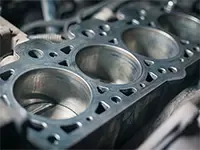
| In aluminum, copper, and other metal-based MMC systems, silicon carbide powders can be evaluated as ceramic reinforcement to support wear resistance, stiffness, thermal conductivity, reduced thermal expansion, and lightweight performance. | 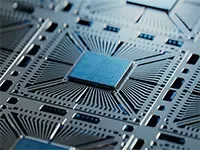
| In SiC-rich systems such as AlSiC and CuSiC, silicon carbide can serve as a primary ceramic phase combined with a metal phase to support thermal management in applications where low density, heat dissipation and controlled expansion are important design considerations. | |
MMC properties influenced by SiC powders
The performance of a metal matrix composite depends on the matrix, reinforcement material, particle characteristics, processing route, and final application requirements. CARBOREX® silicon carbide powders can be specified to support several common MMC design goals.
| Design Goal | Value Enhancement of SiC Powders |
|---|---|
| Thermal Management | Supports heat transfer and heat dissipation design goals; can reduce thermal gradients in engineered systems |
| Low Thermal Expansion | Helps reduce dimensional mismatch and thermal-cycling stress; can also support dimensional stability and creep resistance |
| Wear Resistance | Adds ceramic hardness and abrasion resistance for components exposed to friction, sliding, or contact wear |
| Lightweighting | Supports stiffness, rigidity, a high strength-to-weight ratio, and other density-related design goals |
| Chemical Stability | Supports resistance to oxidation, corrosion, and environmental attack; broadly compatible with metals and lubricants (evaluation required) |
Powder variables for processing and performance
In MMC development, powder chemistry alone is not enough. Particle size, particle size distribution, shape, surface characteristics, purity, density, and lot-to-lot consistency can influence flowability, packing behavior, matrix distribution, part density, reactivity, and compatibility with the selected metal system.
Washington Mills works with MMC producers to evaluate ceramic powder characteristics against specific processing methods, matrices, and design and performance needs. By controlling key variables, your chosen ceramic powder supports more consistent matrix integration, improved packing behavior, and repeatable composite production.
| Control Lever | Performance Impact |
|---|---|
| Particle Size | Supports flowability, dimensional control, matrix distribution, and processing behavior |
| Particle Size Distribution | Supports packing behavior and part density, and influences ceramic loading considerations |
| Particle Shape | Can affect flowability, part density, equipment wear, and matrix integration |
| Surface Properties | Influences reactivity, dispersion, and matrix compatibility |
| Chemistry/Purity | Can affect reactivity, compatibility, durability and performance |
| Reliability | Lot-to-lot consistency supports repeatable processing and specification control at production scale |
Alternative material options for MMC design
Silicon carbide is often the primary focus for MMC systems that require wear resistance, stiffness, thermal conductivity, low thermal expansion, and low density, but it is not the only material option. Other Washington Mills fused minerals may be evaluated for metal matrix composite development when the application requires different property emphasis, cost balance, neutron-absorption consideration, thermal behavior, or custom chemistry. Final material selection should be validated against the selected metal matrix, process route, loading level, and end-use requirements.
Boron Carbide | |||||
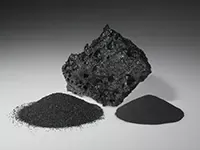
| Boron carbide may be evaluated where neutron absorption, extreme hardness, and chemical inertness are relevant to design. Nuclear or radiation-shielding applications require end-use validation, isotope considerations, and application-specific qualification. | ||||
Mullites | |||||
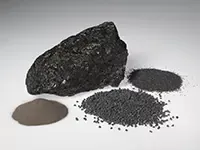
| Fused mullite and fused zirconia mullite may be evaluated where thermal stability and shock resistance, low CTE, deformation resistance, creep-related dimensional concerns, toughness, or wear resistance are important design considerations. | ||||
Fused Aluminum Oxides | |||||
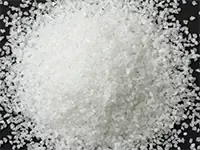
| Fused aluminum oxides may be evaluated for MMC systems prioritizing hardness, wear resistance, thermal stability, chemical stability, and cost balance. | ||||
| Brown Fused Alumina | White Fused Alumina | ||||
Specialty Oxides and Custom Fusions | |||||
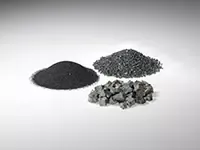
| Specialty oxide and custom fused minerals are available and may be considered when standard powders do not meet target property profiles or processing constraints. For specialized MMC requirements, Washington Mills can discuss alternate material options with your technical team. | ||||
| Alumina Zirconia | Fused Zirconia | Spinel | Custom Fusions | ||
Markets and applications for SiC-reinforced MMCs
Silicon carbide powders can be evaluated for MMC systems where thermal behavior, wear resistance, stiffness, density, and dimensional control are important to the final part or component.
Electronics and thermal management
Key Characteristics: heat dissipation, low density, controlled expansion behavior, AlSiC/CuSiC design considerations
Aerospace and space-related systems
Key Characteristics: lightweighting, stiffness, thermal stability, wear resistance
Automotive and commercial transportation
Key Characteristics: lightweighting, wear resistance, thermal stability, friction and wear considerations
Industrial wear and friction systems
Key Characteristics: hardness, wear resistance, abrasion resistance, sliding contact, mechanical loading
Energy and thermally cycling environments
Key Characteristics: thermal stability, heat transfer, dimensional control
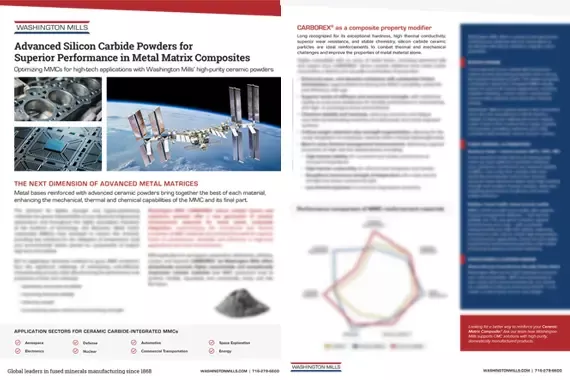
Advanced powders for superior performance
in metal matrix composites
Take a deeper technical look at powder selection factors — including particle size distribution, morphology, purity, surface characteristics, material alternatives, and lot-to-lot consistency — and how they influence metal matrix composite performance.
Metal Matrix Composite Powder FAQs
Review common questions about silicon carbide powders, ceramic reinforcement materials, and powder control considerations for metal matrix composite development.
-
Why is silicon carbide used in metal matrix composites?
Silicon carbide is used in MMCs because it can contribute hardness, wear resistance, thermal conductivity, low thermal expansion, chemical stability, and low density. The actual performance contribution depends on the metal matrix, particle characteristics, processing method, loading levels, and final application requirements.
-
What SiC powder characteristics matter for MMCs?
Important SiC powder characteristics include particle size, particle size distribution, morphology, purity, surface chemistry, density, and lot-to-lot consistency. These variables can affect flowability, packing, dispersion, part density, reactivity, and matrix compatibility.
-
Can SiC powders be used in aluminum matrix composites?
Yes. Silicon carbide powders can be evaluated as ceramic reinforcement in aluminum matrix composites and as a primary ceramic phase in aluminum silicon carbide, or AlSiC, systems. Particle size distribution, morphology, surface characteristics, purity, and loading target should be matched to the selected aluminum alloy, processing route, and performance requirements.
-
How are SiC-reinforced MMCs and AlSiC different?
In SiC-reinforced metal-based MMCs, silicon carbide is typically evaluated as a ceramic reinforcement within a metal matrix. In SiC-rich systems such as aluminum silicon carbide (Al/SiC) or copper silicon carbide (CuSiC), the composite may use a larger ceramic phase combined with aluminum, copper, or another metal phase to support thermal management and dimensional control requirements.
-
What ceramic powders can be used in MMCs?
Silicon carbide, boron carbide, fused aluminum oxide, fused mullite, fused zirconia mullite, and selected specialty oxides can be evaluated as ceramic reinforcement materials or property modifiers in metal matrix composites. The appropriate material depends on the metal matrix, process route, loading target, particle characteristics, and final application requirements.
-
Can boron carbide be used in metal matrix composites?
Boron carbide can be evaluated for MMC systems where neutron absorption, extreme hardness, and chemical inertness are relevant.
-
Does Washington Mills supply finished MMC components?
Washington Mills supplies ceramic powders and fused mineral materials to MMC producers to be used as inputs in material development. Washington Mills supports manufacturers with powder selection and specification discussions, but final composite design, processing, component production, and application qualification remain with the MMC producer or end-use team.
-
Can Washington Mills support MMC powder selection?
Washington Mills can help evaluate ceramic powder and fused mineral options based on target properties, particle requirements, matrix compatibility, and production needs. Final formulation, processing conditions, and application qualification should be validated by the MMC producer or end-use engineering team.
Discuss your MMC powder requirements with Washington Mills
Whether you are evaluating silicon carbide, boron carbide, fused alumina, or another powder input, Washington Mills can help your team assess material options and particle specifications, and supply consistent material for your metal matrix composite.