Fluidized Bed

Fused Alumina Media for Demanding Fluidized Bed Systems

Fluidized bed systems depend on bed materials that can maintain particle integrity, predictable fluidization, and thermal stability under demanding operating conditions. Washington Mills supplies engineered fused alumina media for fluid bed furnaces, gasification, combustion, waste-to-energy, biomass, and other industrial systems where attrition, fines generation, agglomeration, carryover, and thermal instability can limit performance and efficiency.

Fluidized bed media, or bed material, are solid particles suspended by an upward flow of gas, resulting in a bed which behaves like a fluid. In industrial systems, media selection influences heat transfer, temperature distribution, gas–solid contact, particle carryover, and long-term process stability.

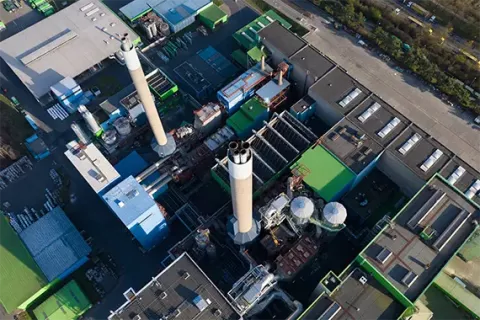
Industrial processing facility illustrating fluidized bed operations

Why bed material selection matters in modern fluidized beds

Bed material is more than a passive filler in a fluidized bed, regardless of reactor type or purpose. As systems become more demanding—as operating temperature, feedstock variability, residence time, and downstream quality requirements increase—conventional mineral-based media can become limiting.

Particle breakdown, fines accumulation, chemical interaction with ash or alkali species, and thermal instability can alter fluidization behavior over time, increasing carryover, pressure-drop variability, agglomeration risk, and other unplanned disruptions.

Material choice influences behavior

The way a bed fluidizes, transfers heat, resists degradation, and interacts with the process environment can be influenced by particle size distribution, particle density, shape, hardness, surface condition, and chemistry.

As attrition, reactions, or PSD shifts within the media bed, operators may see changes in:

  • minimum fluidization velocity
  • pressure-drop behavior
  • entrainment
  • carryover
  • agglomeration risk
  • process stability


Engineered fused alumina media can help reduce material-driven variability when properly specified for the reactor and operating environment.


Common fluidized bed media failure modes

Attrition and fines generation

As bed particles fracture, erode, or abrade, fines can accumulate in the reactor and downstream equipment. This can change particle size distribution, pressure-drop behavior, entrainment rate, and cyclone loading.

Agglomeration and defluidization

In alkali-rich environments, silica-containing media may react with potassium or sodium species to form lower-melting phases. This promotes particle sticking, agglomeration, channeling, and eventual loss of fluidization.

Thermal non-uniformity

Bed materials with limited or inconsistent thermal stability can contribute to localized temperature gradients and hot spots. In gasification systems, these conditions affect tar persistence, volatile exposure, and downstream cleanup requirements.

Carryover and downstream loading

Fines and fragmented particles can increase loading on cyclones, filters, and downstream gas-cleaning or air pollution-control equipment. Reducing media degradation at the source helps to support more stable and efficient operation while extending the durability and longevity of equipment.

Lifecycle cost and campaign stability

Media with a lower purchase price may not produce the lowest campaign cost. Media degradation can increase replacement frequency, operator intervention, downtime, and downstream loading and maintenance, while also reducing throughput efficiency and productivity. Bed media should be evaluated on total operating impact—including consistency, campaign length, contribution or detraction from system reliability, and cleanup—not price per pound alone.


Protecting syngas value in gasification

In gasification and waste-derived conversion systems—where syngas, process gas, or co-product gas is often the intended product stream—the value of recoverable product gas depends on whether it can meet the cleanliness, consistency, and contaminant limits required for downstream use.

A range of factors overlap and intersect to critically influence syngas quality. Properly specified fused alumina bed material can help support the stable reactor conditions that protect syngas usability and consistency by reducing fines generation, carryover, contaminant loading, thermal variability, and downstream cleanup demands.

Factors impacting syngas quality:

  • feedstock chemistry
  • operating temperature
  • residence time
  • gasifying agent
  • downstream cleanup strategy
  • bed media selection
  • alkali sensitivity
  • gas-solid contact
 

Engineered alumina media selections

Washington Mills offers fused alumina media options for different fluidized bed operating requirements, including particle durability, density, surface condition, capillarity, dust control, and high-temperature stability. Product selection should be based on reactor design, suspension conditions, feedstock chemistry, temperature profile, and downstream sensitivity.

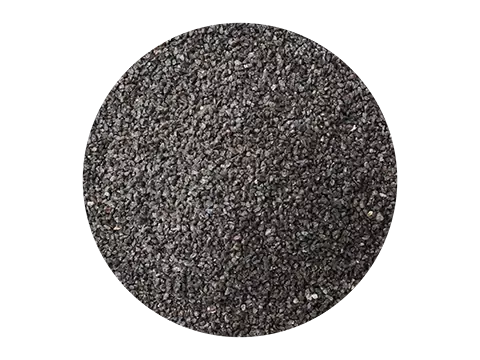
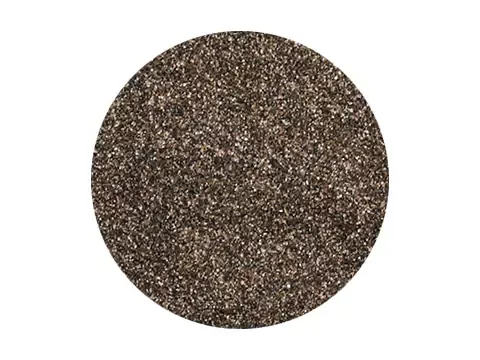
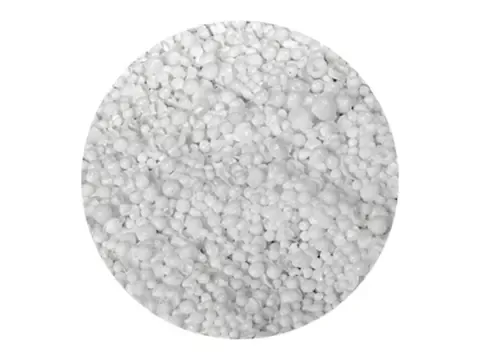
DURALUM® brown fused alumina fluidized bed media   DURALUM® HC high-capillarity brown fused alumina media   DURALUM® AB hollow alumina bubble media

DURALUM®

A high-density brown fused alumina media for demanding fluidized bed operations where particle integrity, controlled sizing, and high-temperature stability are priorities.


DURALUM® HC

A high-capillarity brown fused alumina media designed for applications where clean grain surfaces, reduced adhering dust, controlled sizing, and low carryover are important selection factors. DURALUM® HC is best implemented within systems where surface condition and particle control are central to performance.


DURALUM® AB

A low-density hollow alumina bubble media for specialized systems where low bulk density, spherical morphology, and high-purity alumina chemistry are important. DURALUM® AB may be ideal for sensitive or low-flow operating conditions that require a different density profile than high-density fused alumina grain.

Fused alumina vs. conventional fluidized bed materials: selection factors

No bed media is universally right for every reactor. While conventional sand, olivine, dolomite, and other mineral-based materials may be adequate in some systems, in more demanding fluidized bed environments, bed material selection often requires closer evaluation of properties such as durability, chemistry, density, thermal stability, carryover behavior, and total lifecycle cost.

Compare fused alumina bed media with conventional fluidized bed materials by evaluating media behavior and property limitations in your specific reactor environment.

SELECTION FACTORCONVENTIONAL MINERAL-BASED BED MEDIAENGINEERED FUSED ALUMINA BED MEDIAWHEN TO EVALUATE
Particle durabilityMineral-based media can fracture, abrade, or generate fines depending on material type, feedstock, operating severity, and residence time.Engineered fused alumina is designed for high hardness, controlled sizing, and strong particle integrity to resist attrition and degradation in severe environments.When attrition, pressure-drop variability, bed turnover, or fines accumulation are limiting campaign stability.
PSD stabilityBreakage, abrasion, and fines generation can cause particle size distribution to shift, affecting fluidization behavior and pressure drop.Controlled sizing and high particle integrity limit PSD drift, supporting more stable fluidization behavior and particle size distribution over time.When maintaining consistent fluidization behavior, pressure drop, and bed performance over extended campaigns is critical.
Chemistry and alkali/ash interactionSilica-rich media can interact with alkali species or feedstock ash, particularly in biomass, waste-to-energy, or gasification environments.Engineered fused alumina contains minimal reactive silica content, reducing material-driven contributions to agglomeration and defluidization risk.When feedstock chemistry, ash behavior, clinkering, agglomeration, or defluidization risk are recurring concerns.
Thermal operating windowMany silica-rich or reactive mineral media soften, react, or become less stable under severe high-temperature conditions. In alkali-rich environments, low-melting alkali-silicate phases can contribute to sintering and particle adhesion at temperatures as low as ~700–800°C.Engineered fused alumina has a melting point above 2000°C, provides high thermal stability, and supports wider operating envelopes in thermally demanding systems.When reactor temperature, temperature uniformity, or extended campaign operation is constrained by media behavior.
Density and fluidization behaviorLower-density media may be easier to fluidize in existing systems, but can offer less control over durability, chemistry, particle behavior, or long-term bed stability.High-density fused alumina requires deliberate evaluation of gas velocity, distributor design, and fluidization targets, but can support improved control over particle behavior, reduced degradation, and consistent bed performance. Low-density alumina bubble media may be evaluated for specialized low-flow systems or contamination-sensitive systems.When media density, particle size distribution, and morphology should be matched to reactor design, operating velocity and performance targets.
Carryover, dust, and downstream loadingFriable media, surface fines, and particle breakdown can increase entrainment, cyclone loading, filtration burden, and downstream maintenance.Attrition-resistant, closely sized, clean-surface alumina media can reduce degradation-driven fines and carryover potential.When particulate carryover, APC loading, downstream fouling, or maintenance frequency are operational concerns or limitations.
Lifecycle economicsLower initial media cost can be negated by greater replacement frequency, handling, downtime, maintenance requirements, and downstream cleanup.Higher-performance engineered fused media can support increased campaign longevity and stability, more consistent process behavior, and ultimately offer lower cost of ownership than commodity-driven materials, particularly when lifecycle benefits are evaluated against target operating conditions.When annualized operating cost and uptime matter more than purchase price per pound.

Get a Fluidized Bed Media Recommendation ›

Selecting the right bed materials for your reactor requirements

For the most accurate media recommendation, tell us about your:

  • Reactor type

  • Operating temperature range

  • Current bed material

  • Particle size target

  • Feedstock or process stream

  • Known ash or alkali concerns

  • Gas velocity or fluidization conditions

  • Carryover or dust issues

  • Downstream filtration, catalyst, or syngas-quality requirements

Bed material selection should be based around the operating conditions of the system. Washington Mills can help evaluate material and sizing options based on reactor type, temperature profile, current media, suspension agent, feedstock or process chemistry, gas velocity, target particle size, density requirements, dust or carryover concerns, and downstream process sensitivity.


Request Product and Sizing Guidance

 
TBD

Engineered alumina for modern fluidized beds

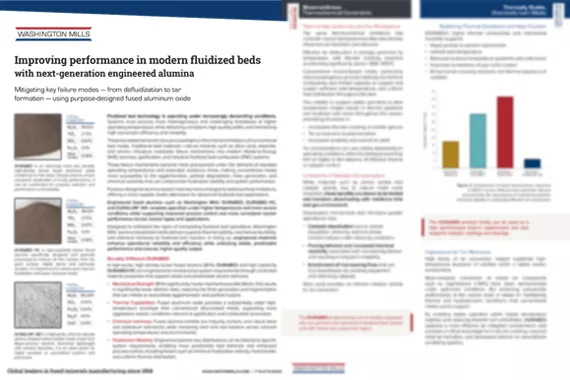
Download the technical brief for a deeper discussion of fluidized bed failure modes, including attrition, fines generation, agglomeration, thermal instability, tar-related conditions, syngas quality, and lifecycle cost considerations.

Download the Technical Brief

Fluidized bed applications

Fused alumina fluidized bed media can be evaluated across thermal processing, heat-treatment, gasification, combustion, waste-to-energy, and specialized reactor environments where media durability, particle behavior, thermal stability, or chemical interaction can influence process consistency.

Fluidized bed furnaces

Fused alumina media can be evaluated for high-temperature fluid bed furnace environments where consistent particle behavior, surface condition, and durability are important to process stability.

Wire annealing and thermal wire processing

In wire annealing operations, fluidized alumina media can help support rapid, uniform heat transfer around wire as it is exposed to a controlled fluidized bed furnace environment. Media selection may affect temperature uniformity, surface cleanliness, particle carryover, and process consistency, making controlled particle size, low dust, and stable alumina chemistry important considerations.

Biomass gasification

In biomass gasification, where syngas may be the intended product stream, bed material selection can influence the fluidization stability, heat transfer, ash interaction, tar-related conditions, and contaminant loading that affect downstream gas use and gas-cleaning burden, and process consistency.

Pyrolysis

In fluidized bed pyrolysis systems, bed media helps transfer heat rapidly and uniformly to feedstock under low-oxygen thermal-conversion conditions. Engineered alumina materials may help pyrolysis operators manage heat transfer, bed stability, particle degradation, ash interaction, carryover, and downstream contamination risk.

Waste-to-energy (WtE) and municipal solid waste (MSW) processing

Municipal solid waste, refuse-derived fuel, solid recovered fuel, and other waste-derived feedstocks can introduce variable ash chemistry, alkali exposure, fines, and condensable species. Engineered alumina media can help reduce material-driven instability in WtE, gasification, pyrolysis, or combustion systems where media durability, chemical stability, carryover control, and lower material-driven contamination are important to reliable operation and the preservation of product-gas value.

Industrial fluidized bed combustion

For fluidized bed combustion (FBC), circulating fluidized bed combustion (CFBC), and other high-temperature combustion systems, bed media durability and chemical stability support more consistent bed behavior over operating campaigns.

Specialized reactor systems

For low-flow, high-temperature, contamination-sensitive, or other specialized environments, Washington Mills can help evaluate whether low-density alumina bubbles may be more appropriate than high-density or high-capillarity fused alumina media.

Frequently Asked Questions

Fluidized Bed Media

  • What is fluidized bed media?

    Fluidized bed media, or fluidized bed materials, are solid particles suspended by an upward flow of gas so the bed behaves like a fluid. In industrial systems, the media helps transfer heat, distribute temperature, maintain gas–solid contact, and support stable process behavior.

  • Why is fused alumina used as fluidized bed media?

    Fused alumina offers high hardness, thermal stability, chemical stability, and controlled particle sizing. These properties can help support stable fluidization, reduce attrition-related fines, and improve consistency compared to conventional media, which is typically more friable or reactive.

  • How does bed material affect fluidization stability?

    Bed media affects fluidization stability through particle size, density, shape, surface condition, and durability. As media degrades or changes size distribution, the system may experience changes in minimum fluidization velocity, pressure-drop behavior, entrainment, carryover, and bed uniformity.

  • What causes agglomeration in fluidized bed systems?

    Agglomeration can occur when particles stick together due to ash chemistry, alkali species, molten or softened phases, or interactions between feedstock components and bed material. Silica-rich media is vulnerable in alkali-rich environments because potassium or sodium species may form lower-melting alkali silicates.

  • Can fused alumina replace silica sand, olivine or dolomite?

    Fused alumina is a stronger, more controllable alternative to silica sand, olivine, dolomite, or other mineral-based bed materials, particularly when attrition, fines generation, agglomeration risk, high-temperature stability, or chemical reactivity are concerns.

    Full suitability should be evaluated based on reactor design, operating temperature, feedstock chemistry, gas velocity, and target particle behavior.

  • Can bed material affect syngas quality?

    Indirectly, yes. Bed media does not determine syngas quality by itself, but media durability, chemistry, particle size stability, and thermal behavior can influence reactor stability and contaminant loading and help protect the operating conditions that allow syngas output to remain usable, consistent, and easier to clean or upgrade.

  • Can fused alumina help reduce tar in gasification systems?

    In gasification systems, stable high-temperature operation, consistent heat transfer, and reliable bed hydrodynamics support the thermal conditions required for tar mitigation. While not a tar-removal catalyst, fused alumina supports an ideal environment for tar reduction. In-situ tar behavior depends on multiple factors, including feedstock, reactor design, temperature, residence time, and any catalytic strategy used.

  • What information is needed to make a bed material recommendation?

    Useful information includes reactor type, suspension agent, current media, operating temperature, gas velocity or fluidization conditions, particle size target, feedstock or process chemistry, ash or alkali exposure, carryover concerns, downstream filtration or catalyst sensitivity, and performance goals.

  • What is the difference between DURALUM and DURALUM HC?

    DURALUM® is an engineered high-density fused alumina media suitable for demanding fluidized bed systems. DURALUM® HC is our high-capillarity option, ideal for applications where clean grain surfaces, dust reduction, and carryover control are important.

  • What is the difference between bed media and bed material?

    Fluidized bed media and fluidized bed material are often used to describe the same class of particles used in a fluidized bed. In high-temperature industrial systems, the selected material acts as the particle bed that supports heat transfer, gas–solid contact, and reactor stability. Material selection should account for particle size, density, shape, chemistry, durability, and downstream process sensitivity.

Need help selecting fluidized bed media?

Washington Mills can help evaluate fused alumina media options for your specific fluidized bed system.